10,003 Stitches: A Critical Making Quilt

 Posted by  ATCM 6388, Coursework, Fashioning Makers, Project News  Comments Off on 10,003 Stitches: A Critical Making Quilt
May 142019
 

By: Carlin Flores, Spring 2019

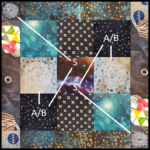
In the Spring semester of 2019, my Critical Making course with Dr. Kim Knight drove me to tackle the project I’d avoided for years: a full-size quilt. Marriam Webster defines a quilt as: “a bed coverlet of two layers of cloth filled with padding (such as down or batting) held in place by ties or stitched designs.” A brief definition for an impossibly lengthy process. Dubbed 10,003 Stitches, this quilt pushed me in ways I had never experienced and opened my eyes to a new world of making.

Continue reading »

Our Technology is a Little Shy

 Posted by  ATCM 6388, Coursework, Fashioning Makers, Project News  Comments Off on Our Technology is a Little Shy
May 102019
 

By: Atanur Andic, 10 May 2026

This paper aims to describe and analyze the making of the project called “Our Technology is a Little Shy” in the practices of critical making. This project was completed as part of the course Critical Making in the program of Arts Technology and Emerging Communication at the University of Texas at Dallas. The paper briefly explains: how did the critical aspect and the physical shaping of the project emerged, what are the various technologies and methods used, what were some of the major troubleshooting faced in the making, how does the final object addresses and reflects some of socio-cultural issues that were aimed in the beginning, and finally, how it can be positioned as a product of the critical making.

Continue reading »

Musical Quilts

 Posted by  ATCM 6388, Coursework  Comments Off on Musical Quilts
May 102019
 
Quilt showing a diagram of the soft circuit

By Elizabeth Fuchs, Spring 2019

When I first began conceptualizing this project, I struggled with the question of is this idea in fact critical making? Matt Ratto positions critical making at the intersection of critical thought and physical making with more emphasis towards the process rather than the final object (Ratto pars. 9-11) and yet I found myself focusing on the final object with this constant uncertainty. Was what I was making critical enough? It was only in the creation of the object—the process of making—that I truly began to understand the critical making through the lens of material, technology, choice, change, collaboration, and reflection, many of which have no bearing on the end product but on the path used to get there.

I started by asking myself two questions: what materials and technologies did I want to explore and what problem or issue did I want my project to interact with. Knowing I wanted to work with a combination of fabric and sound, I set about researching different technologies integrating the two. During my research, I came across Kobakant DIY, a website founded by Mika Satomi and Hannah Perner-Wilson that documents and makes accessible their research into wearable technology.

Continue reading »

A Luta Continua/The Struggle Continues

 Posted by  ATCM 6388, Coursework, Fashioning Makers, Project News  Comments Off on A Luta Continua/The Struggle Continues
May 102019
 
a lilypad and LEDs are embroidered onto a piece of white linen. Above the soft circuit a visualization of a sound file is also embroidered

By: Mohammed Mizanur Rashid, 10 May 2026

Critical Making as an academic discourse, and the second maker project as an individual (and collaborative?) endeavor have both been empowering and emancipatory. I say this not only from a personal feeling of achievement, but also because I feel that now I am equipped with an analytic lens that enables me to see how both ‘critically making things’ and ‘making critical things’ work in tandem towards achieving a set of goals. On a personal level, the projects which I have completed as the requirements for this course have inspired me to reassess my position and rethink my identity as a scholar alone - I have now begun to reimagine my future endeavors as a scholar-maker. While the first maker project was guided and instructional, the second project challenged imaginative diversity, and demanded more individual imprint. It is here that the experiences were particularly productive because, Critical Making, then for me, became a way to reflect on the shifting of perspectives (Boggs et. al., 324). I was not only engaging in discussions and dialogues on critical issues that interest me, but was actively making an object that would invite critical engagement and demand attention from a wide variety of publics and counter-publics. The affordances of the latter, at least for me in this particular temporal conjuncture, outweigh the affordances of the former.

Continue reading »

(Re)constructing Disability and Cripping the Critical

 Posted by  ATCM 6388, Coursework, Fashioning Makers, Project News  Comments Off on (Re)constructing Disability and Cripping the Critical
May 082019
 

By: David Adelman, May 8, 2026

From my current vantage point, the end of the Fall 2018 semester at ATEC feels inexorably distant. This is the point at which I first encountered ATCM 6388: Critical Making as a course offering, the point at which I first began to contend with what it would mean to be a “maker.” at least, in the context of the course. And, to be clear, not just any maker, but a maker with a disability. After all, I use a wheelchair to get around, I have significant issues with fine and gross motor control. And, there is the ever-present specter of spasticity.

Continue reading »

Holding Hands Project

 Posted by  ATCM 6388, Coursework, Fashioning Makers, Project News  Comments Off on Holding Hands Project
May 072019
 

By: Cameron Irby, 10 May 2026

A phrase that I’ve only recently encountered yet hear quite often around Fashioning Circuits is that sometimes we must fall back into the theory. I’m still new to the practices of critical making, so the phrase has mostly struck me as a backup plan. If one’s project doesn’t work as intended, find a way to make it work. Find some theory that says that failure is okay and that we learn more from mistakes than perfection. The idea that one should retroactively apply theory struck me as one of necessity rather than ingenuity. As I worked on my own project, I quickly found that phrase to have a new and much more expansive meaning.

Continue reading »